Film; Report;
______________________________________________________
Invitation; Speakers; Programme; Poster and banner;
Film
Report
The full report from the conference “Co-existing with ice – in a changing climate”, hosted 17 March by C2B2 LivingLab North in Luleå, is available on Zenodo. The report summary is included below.
The slides to the presentations during the conference can be found both under Speakers and in the Programme.
Summary
A big thank you to all participants at the conference! During the day a broad range of information was presented ranging from information on ice and ice in a climate change perspective, marine spatial planning, breaking of ice and effects on ice from offshore wind installations, effects on shipping by offshore wind installations during ice season as well as information on the ice track and ice roads in the Luleå Archipelago and how urban winter could be developed further through research. The last presentation considered what the changed winter season means for the culture and identity.
From the presentations given it is clear that the ice season in the area bears challenges to the shipping, energy and tourism sectors and will continue to do so also in the future.
A lack of strategy for energy planning nationally in Sweden was identified at the conference, and it is unclear what direction policymakers intend to take. Politicians are expected to set the direction, but this is currently missing. County Administration Boards do not always have full perspective and cannot assess cumulative effects.
Questions that still need to be addressed:
- There is no compiled or integrated knowledge base, even though such information would be valuable.
- Climate change raises issues related to future perspectives, policy, planning, decision-making processes, and the delivery of icebreakers.
- Security and governance considerations also need attention.
- Faster planning and policy decisions are required due to accelerating climate change.
Planning and direction:
There is no Swedish-Finnish coordination for planning offshore wind farms, nor from an energy-strategy perspective. Friction exists between civilian and military interests (similar to experiences in Poland and Estonia). More knowledge is needed about the depth of ice ridges and further investigations are required; investment in technologies such as robotics may be useful. Progress has been made in understanding the dynamics between ice and wind farms, but significant knowledge gaps remain. Questions persist about how wind farms interact under winter conditions. Rather than expanding existing spatial planning groups to include shipping, it may be more effective to approach the process from the perspective of shipping first.
- How does deformed ice affect merging fleets?
- How will this influence the need for icebreaking and towing?
- How might the emerging dual-use open up new areas?
Greater collaboration between Sweden and Finland is desired, as well as cooperation with Estonia and others. Experts across these projects are aware of ongoing developments, and the EU sees opportunities in joint work among Sweden, Finland, and Estonia on these issues.
- There is still knowledge that is needed in order to make better decisions concerning offshore wind and co-existence with shipping: Winter navigation research needs to be of higher priority in Sweden. More data on actual measurements are needed for validating models used.
- We need to define safety distances to wind turbines for winter navigation. These distances are strongly linked to operating speed and assistance response time.
- In the work on Marine Spatial Planning, winter situation with ice needs to be incorporated at least for the northern sea basins in Sweden. Marine Spatial Planning also need to be better aligned with the Finnish planning for the Bothnian Bay.
- Collaboration is key to a sustainable usage of our seas and there are lessons to be learned from other countries in the Baltic and elsewhere.
- Winter tourism is now the most important season for the tourism industry in the north.
- Supporting and developing outdoor leisure activities for the public in the region will also help the tourism industry.
- Investments and further development in information to visiting tourists are needed
The conference brought together actors from different sectors and academia facilitating discussions on important societal issues. The feedback from the participants was in general very good, and the concept of combining presentations and workshop discussions well liked.
What happens next
The information and the results of the discussions held during the conference will be used as a basis for the Mistra C2B2 Blue Agenda coming later this year. The results from the conference will also be used in the further work within Living Lab north. Hopefully the knowledge learned and shared at the conference may also be used by the different participants at the conference in their work within their institutions and in their collaborations.
Invitation
On demand: C2B2 LivingLab North invites to a conference on “Coexisting with ice – in a changing climate”. This one-day on-site event is hosted in Luleå, home port of the Swedish icebreakers. Take the chance to join insightful discussions about changing sea ice in the Gulf of Bothnia, winter shipping, wind energy, winter tourism and regional development.
- Where: Luleå, Kulturens hus, Skeppsbrogatan 17
- When: 17 March 2026, 9 am – 4:45 pm
- Last registration date: 6 March.
Speakers
Introduction, Ice and Shipping:



Technology, Winter Navigation and Energy:



Regional Development, Winter tourism and Cultural perspectives:




Programme
Study Visit & Registration
09:00–10:00 — Study Visit to an Icebreaker (It is winter and it’s possible that all Icebreakers are at sea, we can earliest settle this preliminary activity one week before the occasion, However we are planning for alternative activities – please bring warm clothes!)
10:00–10:30 — Registration and Networking
Introduction, Ice and Shipping
10:30–10:40 — Introduction to Mistra C2B2 and background for the conference. Camilla Sandström, Umeå University
10:40–11:05 — Ice thickness, drift and ridges in the Bothnian Bay. Göran Björk, University of Gothenburg.  Presentation.
11:05-11:25 — Future sea ice in the Bothnian Bay. Per Pemberton, SMHI (digital presentation). Presentation.
11:25–11:45 — ”Facilitating co-existance: Spatial planning in the Gulf of Bothnia”. Frida Åberg, Swedish Agency for Marine and Water Management. Presentation.
11:45–12:45 — Lunch
Technology, Winter Navigation and Energy
12:45–13:00 — Results from WINMOS 3 on ice modelling related to windfarms and shipping. Arttu Polojärvi, Aalto University. Presentation.
13:00–13:15 — Ice growth in ship channels. Vasiola Zhaka, Luleå University of Technology & Uppsala University. Presentation.
13:15–13:30 — The impact of windfarms on winter navigation. Jonas Ringsberg, Chalmers. Presentation.
13:30–13:45 — Coexistence between shipping and offshore wind power in areas with sea ice. Maria Bännstrand, RISE. Presentation.
13:45–13:50 — Summing up
13:50–14:50 — Coffee Break, workshops and networking, 2 parallell workshops:
- Studies on ice and windfarms and the effects on winter navigation
- Challenges with unpredictability for winter tourism and regional development
Regional Development, Winter tourism and Cultural perspectives
14:50–15:05 — The ice track in Luleå and ice in urban life. Patrik Zetterkvist, Luleå Municipality. Presentation.
15:05–15:20 — Winter tourism in Norrbotten and implications of a changing climate. Lars Mandahl, Luleå Municipality. Presentation.
15:20–15:40 — Winter City Living Reimagined: An Interreg Aurora project on collaboration for more vibrant winter cities. David Doms, Studio Doms. Presentation.
15:40–16:00 — “Ovinter” – Cultural perspectives on a changing season. Matilda Marshall, Umeå University.
Closing
16:05–16:35 — Group discussion: future needs. We aim to produce a shared list of key points from the conference on what the conference sees as future needs for a sustainable ocean usage with reduced potential conflicts.
16:35–16:45 — Summary and Closing Remarks
Poster and banner
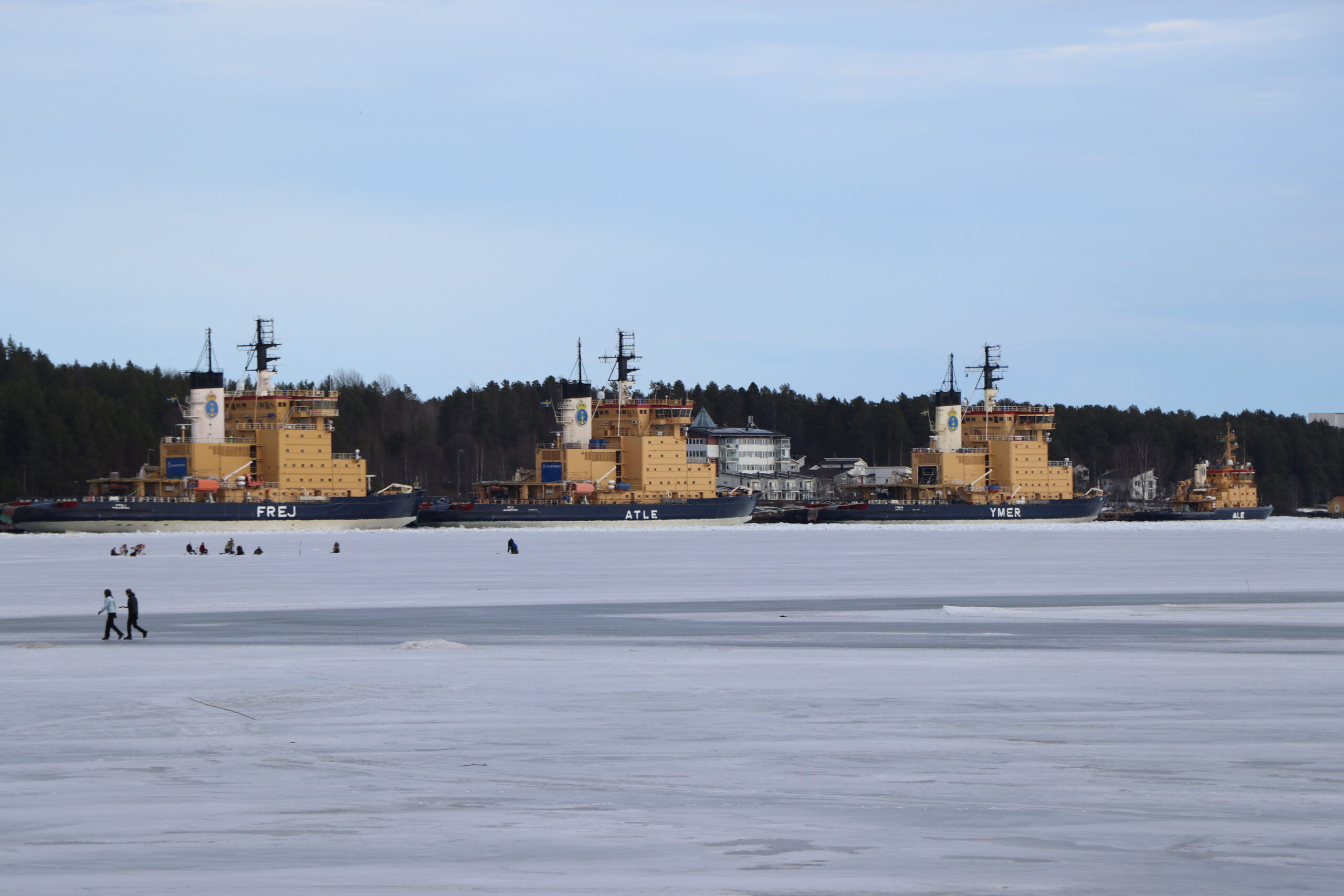
Feel free to download and share the poster (pdf), banner and image below: